

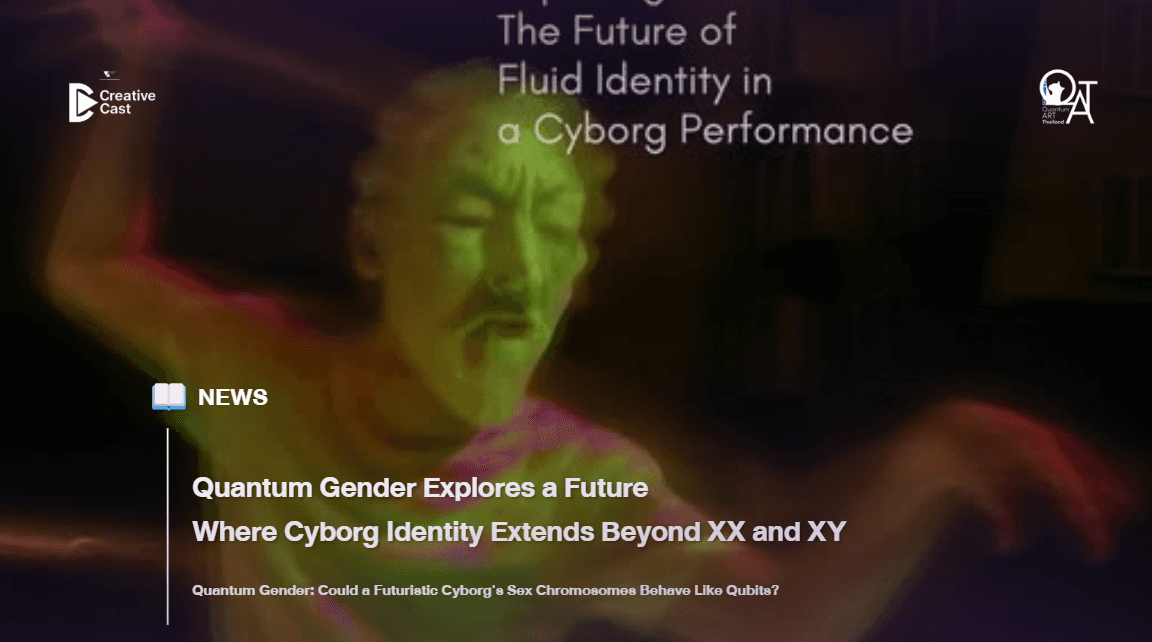
Blending quantum physics, biotechnology, and immersive art, Quantum Gender invites audiences to imagine a future where identity is no longer confined to traditional binaries. Through the speculative lens of a quantum-enabled cyborg, the project explores how emerging technologies may reshape concepts of sex, gender, and human existence.
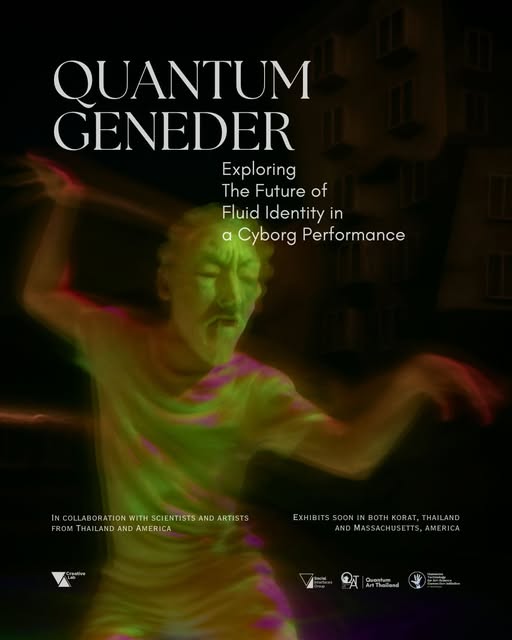
What if the future of human identity is no longer defined by the biological boundaries of XX and XY chromosomes?
This question lies at the heart of Quantum Gender, an interdisciplinary project that combines quantum physics, biotechnology, speculative futures, and immersive art to explore how emerging technologies may transform our understanding of gender and identity.
Inspired by the quantum principle of superposition, the project imagines a future cyborg whose sex-determining system functions more like a qubit than a fixed biological chromosome. Unlike classical binary systems, quantum systems can exist in multiple states simultaneously, offering a powerful metaphor for identities that extend beyond traditional categories.
The project does not claim that gender is literally quantum. Instead, it uses quantum concepts as a framework for exploring the complexity, fluidity, and diversity of human identity. In doing so, it draws connections between advances in physics and evolving understandings of gender beyond binary classifications.
Contemporary biology already demonstrates that sex is more complex than the conventional XX/XY model. Variations such as XXY, XYY, XO, and intersex conditions reveal that biological sex exists across a spectrum of developmental possibilities.
At the same time, rapid advances in biotechnology—including gene editing, reproductive engineering, and programmable biology—are challenging long-standing assumptions about what aspects of human identity are fixed and what may eventually become adaptable.
Building upon these developments, Quantum Gender imagines a future in which cyborgs or bio-digital beings could possess flexible sex-determining systems capable of shifting between multiple states, blending biological programming with digital and potentially quantum-enabled technologies.
Beyond scientific speculation, the project also raises broader ethical and philosophical questions about autonomy, identity, diversity, and the future relationship between humans and technology.
These ideas are brought to life through a hybrid performance video installation that integrates scientific lectures, live performance, interactive digital media, and immersive storytelling.
The experience features three mini-lectures focused on cyborg studies, quantum physics, and biology, followed by an interdisciplinary performance combining human actors and digital projections. Together, these elements explore how artists and scientists can collaborate to generate new ways of understanding future possibilities.
Developed through a collaboration between Thai and American artists and scientists, the project highlights the growing role of art as a platform for public engagement with emerging scientific ideas and societal questions.
The work will be exhibited in both Nakhon Ratchasima, Thailand, and Massachusetts, USA, creating opportunities for international dialogue on identity, technology, and the future of humanity.

MI na-thakarn patisontirapa
Creative
Comments
No comments yet. Be the first.
Sign in to leave a comment.